Thailand Targets US$3 Billion in Pharmaceutical R&D Investment as Global Drugmakers Expand Talks
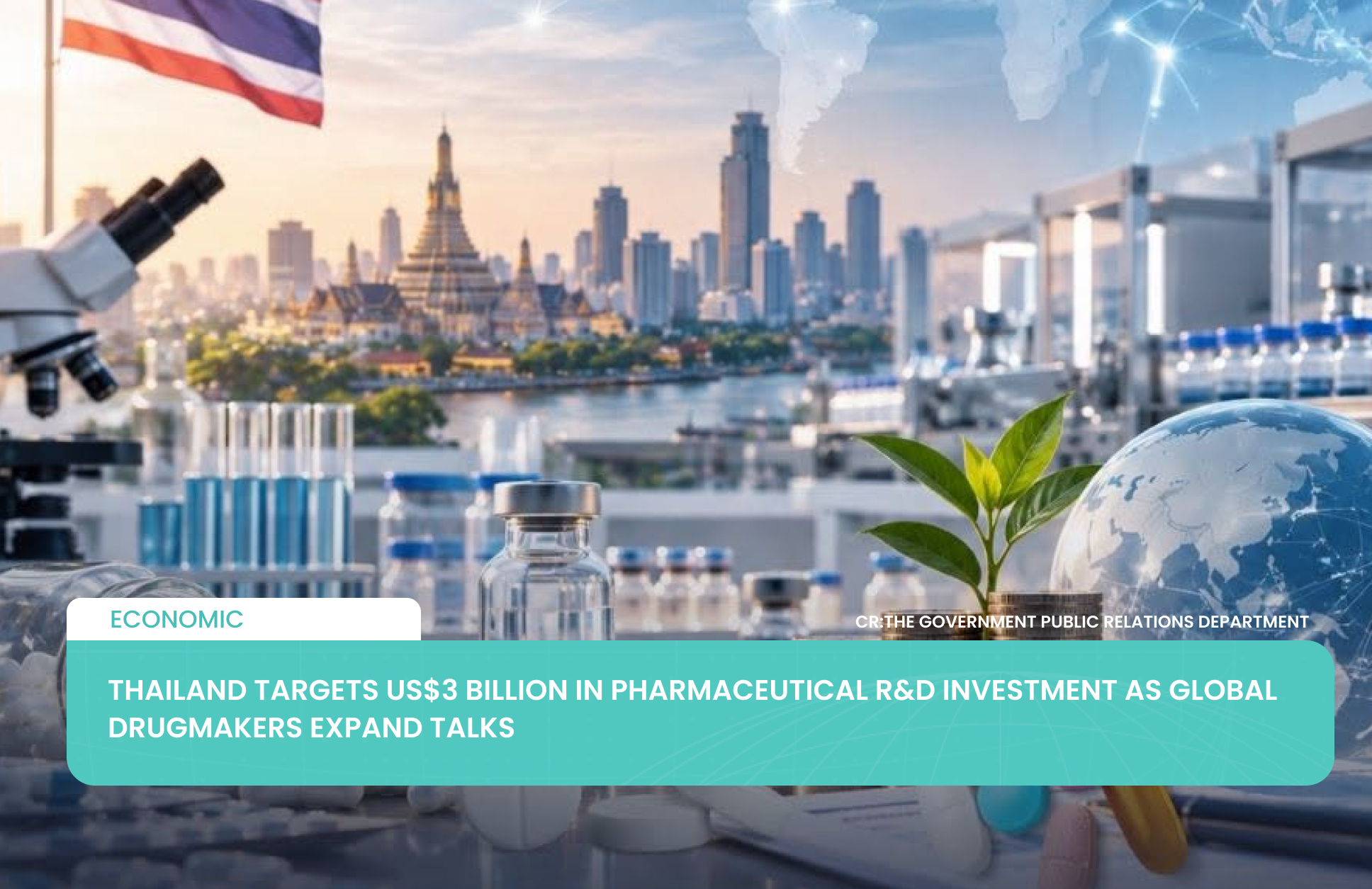
Thailand aims to attract up to THB100 billion, or about US$3 billion, in pharmaceutical research investment as it expands talks with global drugmakers including MSD, Roche and Sandoz to strengthen R&D, technology transfer and local drug production.
Thailand is seeking to attract up to THB100 billion (approximately US$3 billion) in pharmaceutical research investment as the government deepens negotiations with major global drugmakers, marking a strategic shift from being primarily a buyer of medicines toward becoming a partner in drug research, development and production.
The Ministry of Public Health has held talks with leading pharmaceutical companies including MSD and Roche, with further negotiations involving Sandoz and other international drugmakers as Thailand advances its ambition to become a Medical Investment Hub in Southeast Asia.
Government Spokesperson Dr. Ekkapob Pianpises said preliminary discussions with Roche alone involve potential pharmaceutical research investment of approximately THB15 billion, or around US$450 million.
If negotiations with other pharmaceutical companies progress as planned, Thailand could attract combined research investment of as much as THB100 billion. Discussions also extend beyond research to potential pharmaceutical manufacturing and technology transfer in Thailand.
From Medicine Buyer to Research and Development Partner
The initiative represents a broader change in Thailand’s pharmaceutical and healthcare investment strategy.
Rather than limiting its role to purchasing and importing innovative medicines, Thailand aims to become involved in clinical research, drug development, technology transfer and local manufacturing.
The government has described the approach as a transition from a traditional buyer-seller relationship toward an investment partnership in which international pharmaceutical companies contribute research, investment, technology and workforce development to Thailand.
The strategy could also strengthen Thailand’s domestic pharmaceutical ecosystem by creating opportunities for Thai researchers, healthcare professionals, clinical research centers and manufacturers to participate in international drug development programmes.
MSD Partnership Expands Clinical Research in Thailand
Thailand has already taken a concrete step through cooperation with MSD.
The Ministry of Public Health and MSD Thailand signed a memorandum of understanding on September 9 to support Thailand’s pharmaceutical and healthcare ecosystem, with cooperation including the expansion of clinical research in the country.
Government plans also include opportunities for capable public hospitals to participate in clinical trials, while private healthcare institutions could join as partners.
Earlier government information indicated that research associated with a single new medicine could involve approximately THB2 billion in investment and potentially generate demand for highly skilled medical and research personnel.
MSD has also expressed interest in technology transfer and potential cooperation with Thailand’s Government Pharmaceutical Organization in pharmaceutical production, according to government information.
Roche Discussions Could Bring THB15 Billion in Research Investment
Negotiations with Roche represent another significant component of the initiative.
According to the Thai government, preliminary discussions have covered potential research investment worth approximately THB15 billion in Thailand.
Thailand is also preparing for further negotiations with Sandoz and other global pharmaceutical companies as it seeks to build a broader pipeline of research, manufacturing and technology transfer projects.
Investment Could Support Access to New Medicines
Beyond its economic objectives, the government expects deeper participation in pharmaceutical research and production to strengthen Thailand’s ability to negotiate access to new medicines, including treatments for diseases that remain difficult or costly to manage.
The strategy seeks to connect pharmaceutical investment with Thailand’s public healthcare system, potentially creating opportunities for patients to gain access to innovative medicines at more sustainable prices.
At the same time, expanding clinical research and pharmaceutical manufacturing could create new career pathways for Thai scientists, clinical researchers, healthcare professionals and advanced manufacturing specialists.
Thailand Pushes Toward Medical Investment Hub
The pharmaceutical initiative forms part of Thailand’s wider Medical Investment Hub strategy, which focuses on healthcare services, research and development, and manufacturing.
The government has been engaging major international pharmaceutical companies as part of efforts to attract investment, expand clinical trials, encourage technology transfer and strengthen domestic production capabilities.
If the targeted investments materialize, Thailand could move further up the pharmaceutical value chain from importing and purchasing medicines toward participating directly in their research, development and production.
For Thailand, the strategy is therefore not only about attracting foreign capital. It is also intended to build scientific capabilities, develop highly skilled jobs, strengthen the domestic pharmaceutical ecosystem and improve access to medical innovation.
Articles in this category are written by our editorial team to keep you informed about the latest healthcare and medical tourism news.