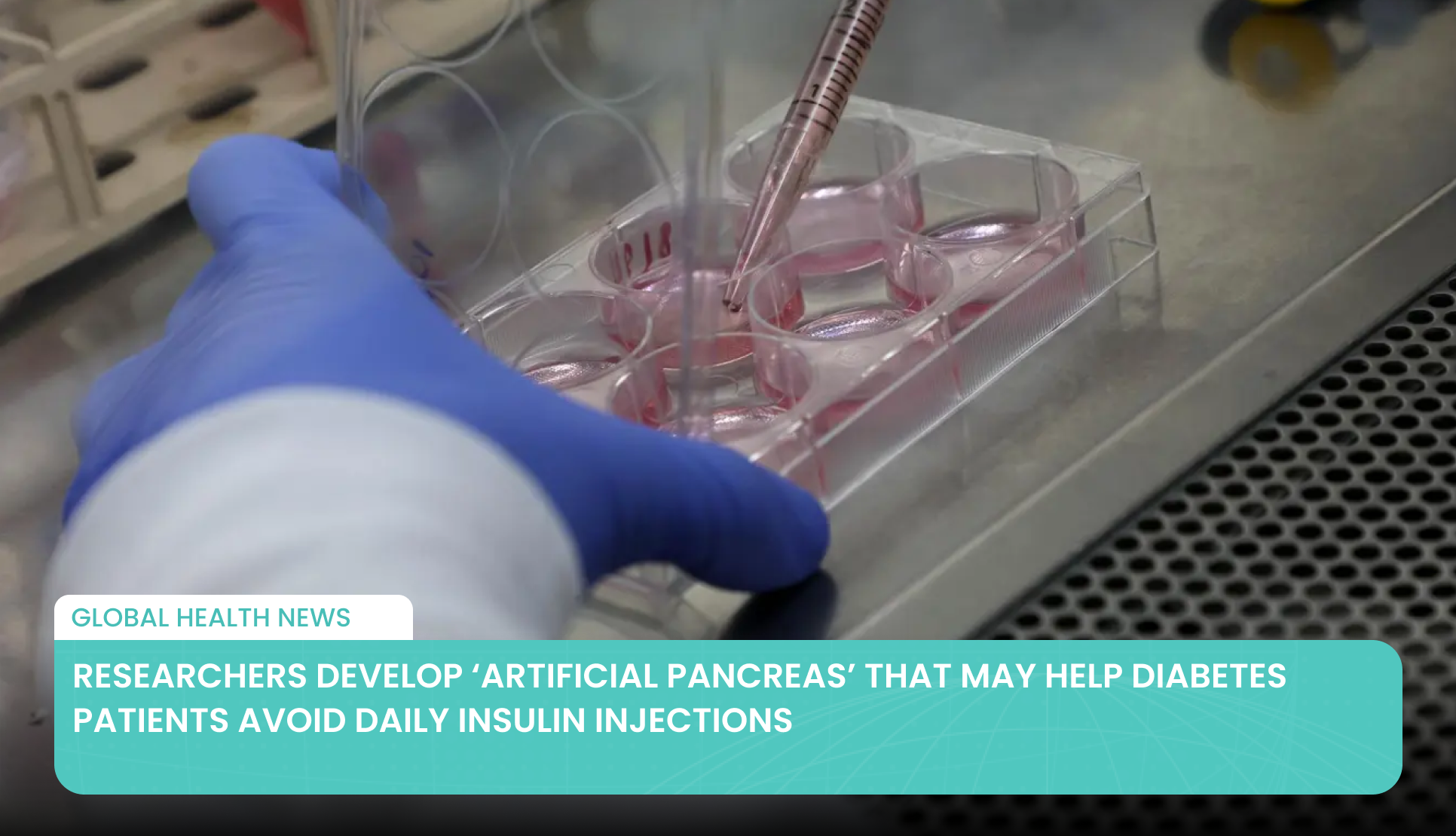
Researchers Develop ‘Artificial Pancreas’ That May Help Diabetes Patients Avoid Daily Insulin Injections
Jerusalem — Researchers have developed an implantable artificial device that functions like a pancreas, potentially eliminating the need for daily insulin injections for millions of diabetes patients worldwide.
Jerusalem — Researchers have developed an implantable artificial device that functions like a pancreas, potentially eliminating the need for daily insulin injections for millions of diabetes patients worldwide.
The Technion – Israel Institute of Technology announced on Monday that a joint research team from Israel and the United States has successfully created the implantable device, designed to operate as an “artificial pancreas.” The system acts like a miniature pharmacy inside the body, continuously monitoring blood glucose levels and automatically producing and releasing the precise amount of insulin required.
Unlike conventional treatment methods, the device functions autonomously without the need for external pumping systems or continuous patient monitoring.
According to the research report, the team addressed one of the most significant challenges in developing implantable medical devices: the body’s immune system, which often attacks foreign materials. To overcome this issue, the researchers designed a protective “crystal armor” that shields the implanted device from immune rejection, allowing it to operate reliably over long periods.
The technology has already demonstrated success in maintaining long-term glucose control in laboratory mice and non-human primates.
While diabetes is the primary target for this artificial pancreas technology, researchers believe it could also be adapted to treat other chronic diseases. By modifying the engineered cells within the device, the system may potentially deliver therapeutic proteins needed to treat conditions such as hemophilia and other metabolic disorders.
If the technology proves successful in human clinical trials, it could mark a major breakthrough in medicine shifting treatment from lifelong drug injections to a form of “living therapy” that autonomously regulates itself within the human body.
Source : Xinhua Thai News
Articles in this category are written by our editorial team to keep you informed about the latest healthcare and medical tourism news.