The Medical Tourism Supply Chain

A supply chain is defined as "a network of entities directly linked by one or more upstream and downstream flows of products or services, finances, and information from a source to a customer."
Supply chain management contributes to the development of robust, sustainable tourism destinations (Grilec-Kauric et al., 2015) and confers competitive advantages on chain participants. A vast network of players comprises the medical tourism supply chain. It is comprised of at least five independent sectors: accommodations, chemicals and pharmaceuticals, hospitals, transportation, and insurance (Lee and Fernando, 2015). The upstream end of the supply chain involves the exchange of products, services, and information between medical suppliers, hospitals, and clinics, whereas the downstream end involves the movement of services, finances, and information from hospitals or clinics to clients.
In the medical tourism supply chain, hospitals, medical travel agencies, hotels, and medical tourists are essential participants. In other words, the major companies are located in the downstream sector, where services are provided to medical tourists.

The medical travel companies and medical travel facilitators are the key significant for the expansion of medical tourism industry. These agents are in collaboration with hospitals, hotels, and airlines to provide medical tourism packages and assist medical tourists in selecting a destination, facility, and provider.
In terms of activities along the medical tourism supply chain, Alberti et al. (2014) shown that key activities include both medical and tourism services. In addtion, the authors assert that local government agencies and service providers, such as stores and banks, promote the medical tourism supply chain. It is also required in several nations.

Ganguli and Ebrahim (2017) highlight the government’s key role in the growth of the medical tourism business and demonstrate how suitable long-term government policies have resulted in major positive medical tourism outcomes. The crucial responsibility of the government in assuring the safety of visitors, introducing proper medical visas for long stays, and retaining sufficient numbers of qualified medical workers. The significance of cooperation among supply chain stakeholders and the integration of information and service flows throughout the chain are discussed. If the stakeholders can integrate seamlessly or at least collaborate well, the supply chain as a whole and the cluster will be more efficient.
References
Alberti, F. G., Giusti, J. D., Papa, F., & Pizzurno, E. (2014). Competitiveness policies for medical tourism clusters: government initiatives in Thailand. International Journal of Economic Policyin Emerging Economies, 7(3), 281-309.
Ganguli, S., and Ebrahim, A. H. (2017). A qualitative analysis of Singapore's medical tourism competitiveness. Tourism Management Perspectives, 21, 74-84.
Grilec Kauric, A., Mikulic, J. and Schroeder, M. (2015). Supply Chain Management in Tourism Systems: A Comprehensive Review of the Literature. 3rd International OFEL Conference on Governance, Management and Entrepreneurship, Dubrovnik, Croatia, 626-63
Lee,H. K., and Fernando, Y. (2015). The antecedents and outcomes of the medical tourism supply chain. Tourism Management, 46, 148-157.
TSCM
Share this article
More Articles
Discover more insights on health care and medical tourism.

Wellness Tourism in Thailand | Why Travelers Come for More Than a Holiday
When people think about Thailand, beaches, street food, temples, and vibrant city life usually come to mind. But in recent years, something has changed. More travelers are arriving with a different purpose — not only to explore, but to improve their wellbeing, reduce stress, undergo preventive health screening, or simply take better care of themselves.
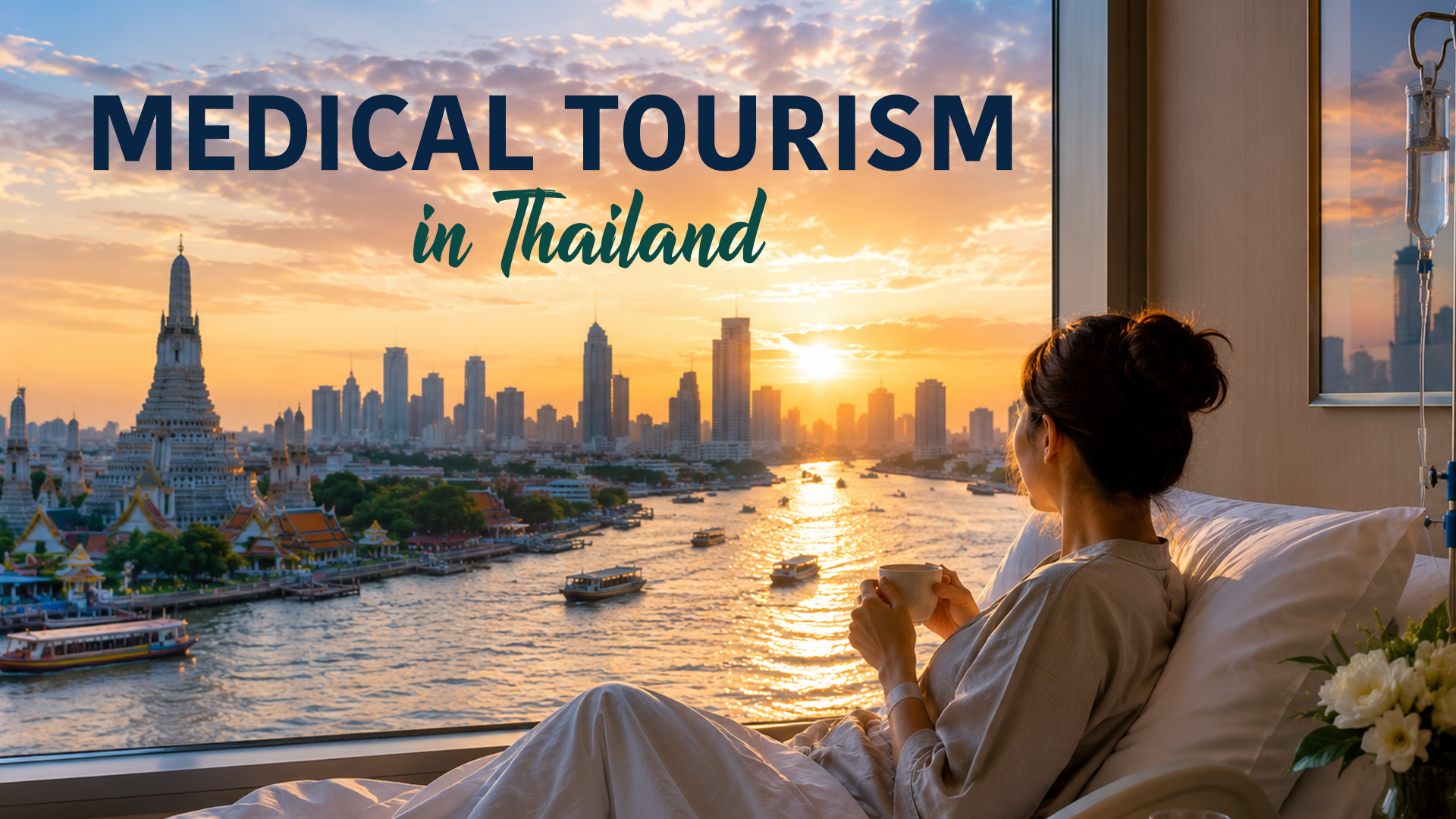
Medical Tourism in Thailand: Where Getting Well Feels Like the Trip of a Lifetime
Imagine waking up in Bangkok, overlooking the Chao Phraya River as long-tail boats drift past your window. Hours later, you've completed a full health screening at a world-class hospital, reviewed your results, and are enjoying iced coffee by a rooftop pool before dinner at Asiatique.

Difference Between “General Massage” and “Anatomy & Wellness Massage”
Anatomy & Wellness Massage combines relaxation with an understanding of muscle structure and body balance. It helps relieve tension, muscle pain, and stiffness, restore movement, and address the root causes of discomfort. Suitable for people with Office Syndrome or chronic muscle pain.